|
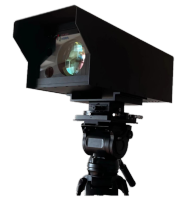
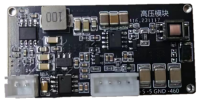
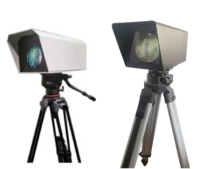
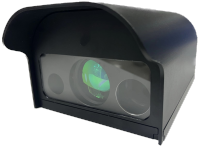
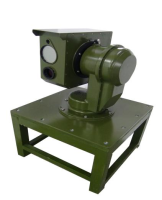
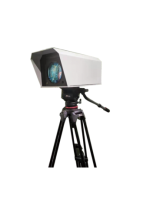
Airborne laser communications equipmentAirborne laser communication is a two-way communication technology that realizes point-to-point, point-to-multipoint or multi-point-to-multipoint voice, data, and image information through laser transmission in atmospheric channels. Compared with radio communication, free space optical communication has the advantages of no frequency license, small crosstalk, high bandwidth, good confidentiality, fast installation, resistance to electromagnetic interference, and convenient and flexible networking. The system uses infrared light bands for data transparent transmission, and the light source uses a laser communication module. The communication rate is more than two orders of magnitude higher than traditional radio communication, with a typical communication rate of 1.25Gbps. It can amplify and transmit any communication protocol data with no limit on communication rate. The data interface is FC/UPC optical fiber, which can also be replaced with other optical fiber interfaces as needed. The system is equipped with a precision tracking imaging capture system, which can effectively suppress the impact of atmospheric turbulence on the link, and is plug-and-play. 
Collect
Features: Compared with traditional microwaves and millimeter waves, it has high bandwidth, low latency, and can achieve real-time two-way communication. The transmission rate is high, with a typical value of 1.25Gbps, far exceeding millimeter wave performance. The laser has high directivity and strong data transmission security and confidentiality. The standard wireless ground station of the entire series can remotely control payload tracking and alignment communications, and supports built-in bit error detectors, optical power detection, video transmission and other components. The equipment interface is a common flange interface, and the control interface is a common USB interface, which has high stability and low maintenance cost. LB50DBA-15JF01
|